



Investing in a new roof is a major decision for any homeowner, making it essential to understand what determines how long that investment will last. While high-quality materials are an excellent starting point, the actual lifespan of your roof is shaped by several other factors—from installation expertise to ongoing environmental challenges. For homeowners seeking reliable protection for their property, knowing these factors is crucial for making informed decisions and maximizing the service life of their roof. Many choose to collaborate with experienced roofing contractors to ensure their roof is both well-constructed and properly cared for.
The life expectancy of your roof is not fixed, even for the same type of material. The region’s climate, workmanship during installation, and how you maintain your roof all play major roles. Recognizing how these elements work together enables homeowners to understand the necessary steps to enhance their roof’s performance and minimize costly repairs over time.
Being aware of factors such as weather patterns, attic ventilation, and nearby landscaping can make a significant difference in maintenance routines and product selection. Taking these variables into account from the outset helps you proactively protect your home, instead of simply reacting when problems arise.
Ultimately, the longevity of your roof depends on a proactive approach—investing in quality upfront and performing regular upkeep to catch issues early.
Roofing Materials and Their Expected Lifespans
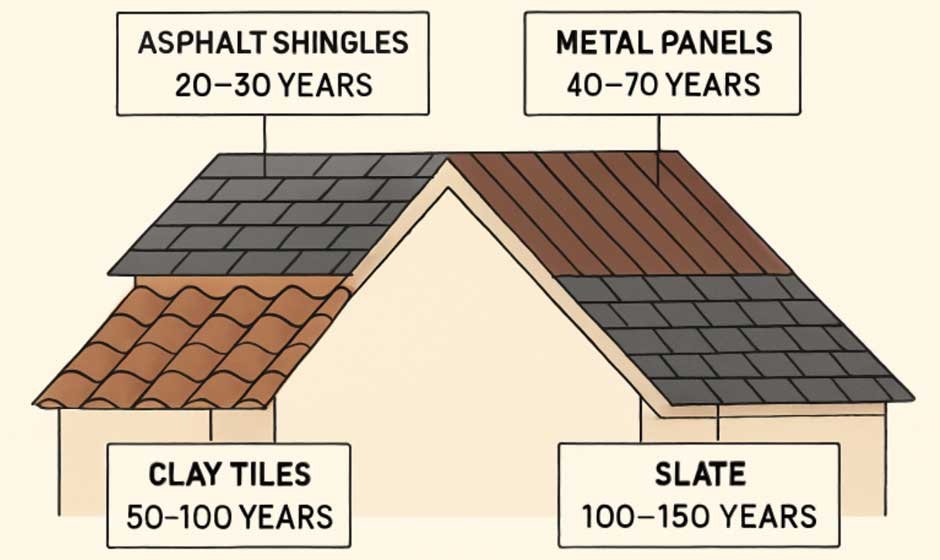
Material selection is the foundation for roof longevity. Each common roofing material has its own average lifespan, influenced by its quality and local conditions. For example, asphalt shingles generally last 20 to 30 years, making them a cost-effective option for many homes. Metal roofs, which offer increased durability and resistance to harsh weather, can typically last 40 to 70 years if properly maintained. Clay and concrete tiles are renowned for their resilience, with a lifespan of between 50 and 100 years. At the pinnacle of durability, slate roofs can last anywhere from a century up to 150 years. The right material depends on your budget, desired aesthetic, and the unique stresses of your regional climate.
Climate and Weather Conditions
Where you live has a remarkable impact on how long your roof will stay in good condition. Homes in areas with high UV exposure will experience faster degradation of materials, particularly asphalt shingles. In contrast, frequent rain, snow, or freeze–thaw cycles can accelerate wear and lead to issues like leaks or ice dams. Selecting a roofing system that matches your region’s demands can save money and trouble down the road.
Quality of Installation
Even premium materials require expert installation to perform properly. Improperly installed flashing, shortcuts in underlayment, or poor sealing around chimneys and vents can create vulnerabilities. Homeowners are encouraged to work only with licensed and experienced contractors to guarantee workmanship that truly extends a roof’s lifespan.
Regular Maintenance and Inspections
Active and consistent maintenance is one of the most powerful ways to increase your roof’s durability. Seasonal inspections, especially after storms, enable small issues such as cracked or missing shingles, minor leaks, or clogged gutters to be addressed before they worsen. Cleaning your roof and gutters regularly prevents water backup and the decay of roofing materials. Minor investments in upkeep often translate into decades of additional performance.
Ventilation and Insulation
The right balance of attic ventilation and quality insulation helps regulate temperature and moisture levels beneath your roof. Poor ventilation can cause heat buildup in the summer and moisture accumulation in winter, both of which contribute to premature aging of roofing materials. Problems such as warped decking, shingle blistering, or even mold can result from insufficient airflow, making effective ventilation systems a necessity for roof care.
Roof Design and Slope
The architectural design of your roof—from its slope to the presence of valleys and dormers—determines how efficiently water and debris are shed. Steeper pitches move water quickly, reducing the risk of leaks, while flat or low-slope roofs may experience more pooling, requiring vigilant monitoring and specialized materials. Complex roof designs may look attractive, but they generally require more maintenance due to a higher likelihood of water collecting in valleys or at connection points.
Environmental Factors
Nearby trees and landscaping elements can have unexpected consequences for your roof. Overhanging branches may scrape and damage the roof surface in high winds, while fallen debris and leaves retain moisture, which can threaten to degrade roofing materials and even clog gutter systems. Regularly trim trees and ensure the area immediately around your roof remains clear to help minimize these risks.
Signs Your Roof May Need Attention
Recognizing the early signs of roof wear can help you avoid major repairs or full replacements. Warning signs include missing, curled, or broken shingles; leaks or water stains indoors; unexpected spikes in heating or cooling costs; obvious sagging in the roof structure; and heavy moss or algae buildup. If you notice these issues, schedule an inspection promptly to address minor problems before they escalate into significant repairs.
Final Thoughts
By proactively managing all these considerations, homeowners can extend the effective life of their roof and protect their property for decades. Understanding what impacts roof lifespan and working closely with trusted professionals can help you enjoy peace of mind and safeguard your home’s value for years to come.